
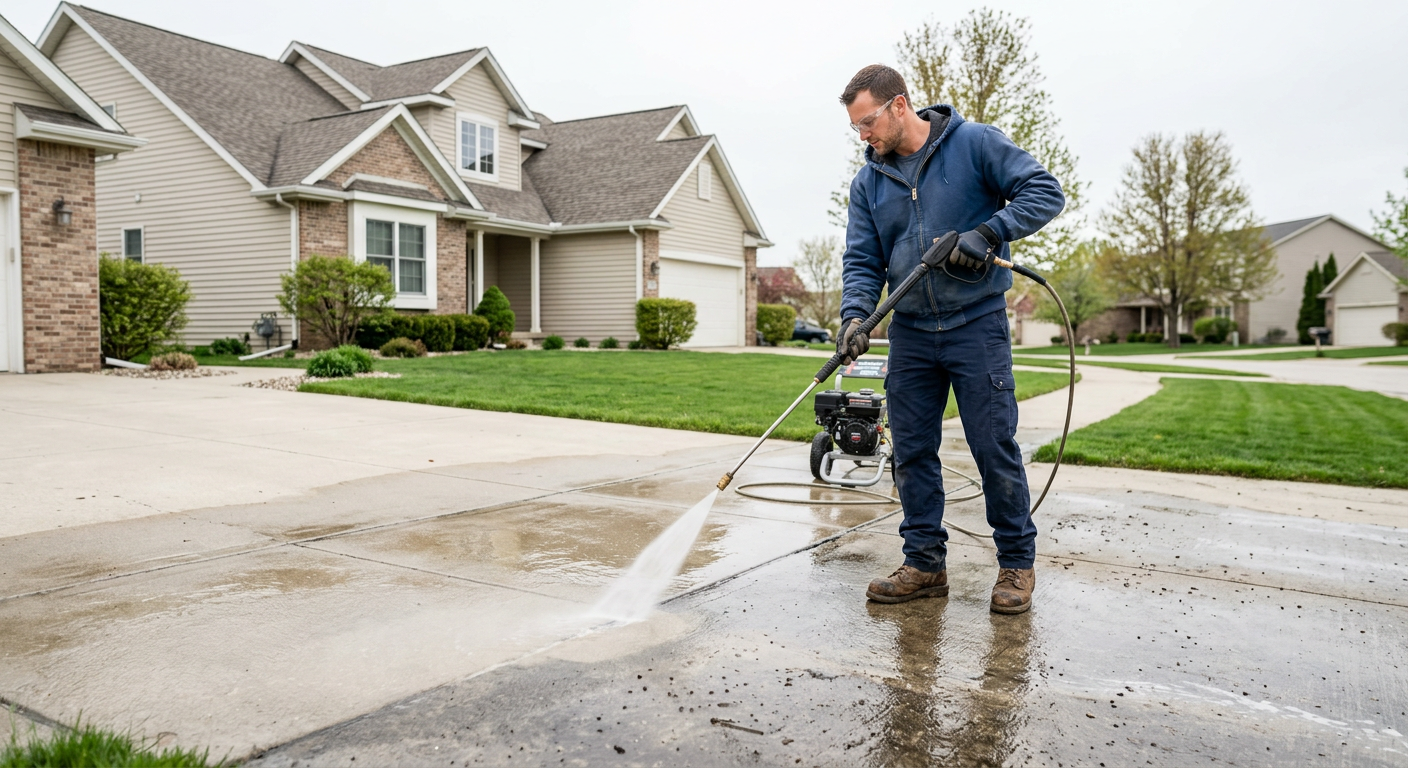
What you'll pay for driveway pressure washing in Chicagoland
These are Power Play's actual rates for residential pressure washing in Chicagoland. Not a national average from a calculator that doesn't know what road salt costs a driveway. Actual numbers from jobs we've done across the north and northwest suburbs.
| Service | Price Range |
|---|---|
| Standard driveway (concrete, two-car) | $100 to $175 |
| Driveway plus walkways | $125 to $200 |
| Full property package | $300 to $525 |
| Deck cleaning | $125 to $225 |
| Fence cleaning | $89 to $175 |
Most driveway jobs fall in the $100 to $175 range. What moves you toward the higher end: size, how long since the last wash, and whether there are oil stains or significant salt deposits. What keeps you at the lower end: a standard two-car concrete driveway, washed within the last couple of years, no stains.
The full property package at $300 to $525 covers siding, driveway, and walkways in a single visit. It's the most common thing we do in spring. One morning, done. Most homeowners who book just the driveway the first time end up booking the full package the following year.
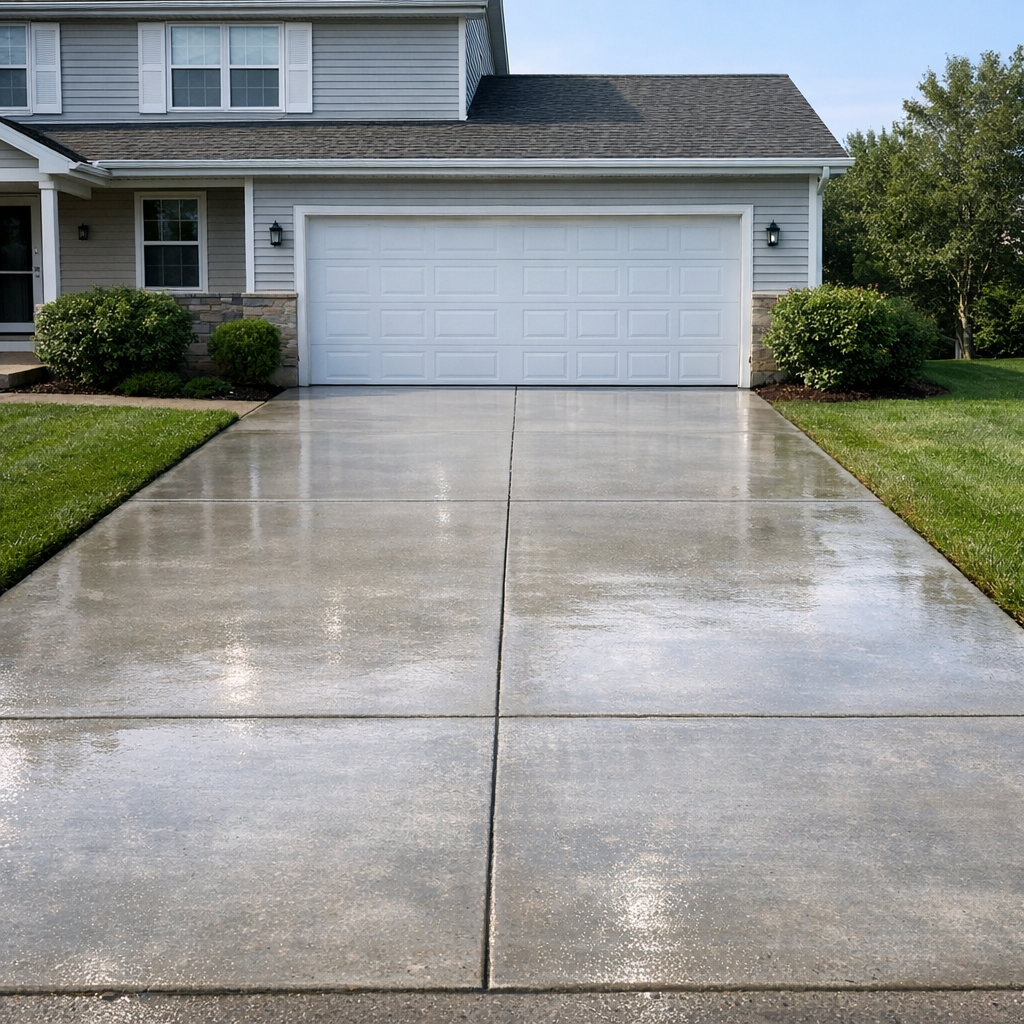
What drives the price up or down
Size is the biggest variable. A single-car driveway is roughly half the job of a double-wide. Circular driveways and U-shapes take longer because of setup and coverage. But beyond size, a few other things affect the final number:
Material
Concrete is the standard. Brick pavers need lower pressure settings to avoid lifting joint sand — that takes more care and time. We clean both in one visit, but pavers add to the job duration.
Buildup
A driveway washed annually takes 1 to 2 hours. One that hasn't been cleaned in 3 or more years takes longer — the buildup is denser, and detergent needs more dwell time. That additional time is reflected in the quote.
Oil stains
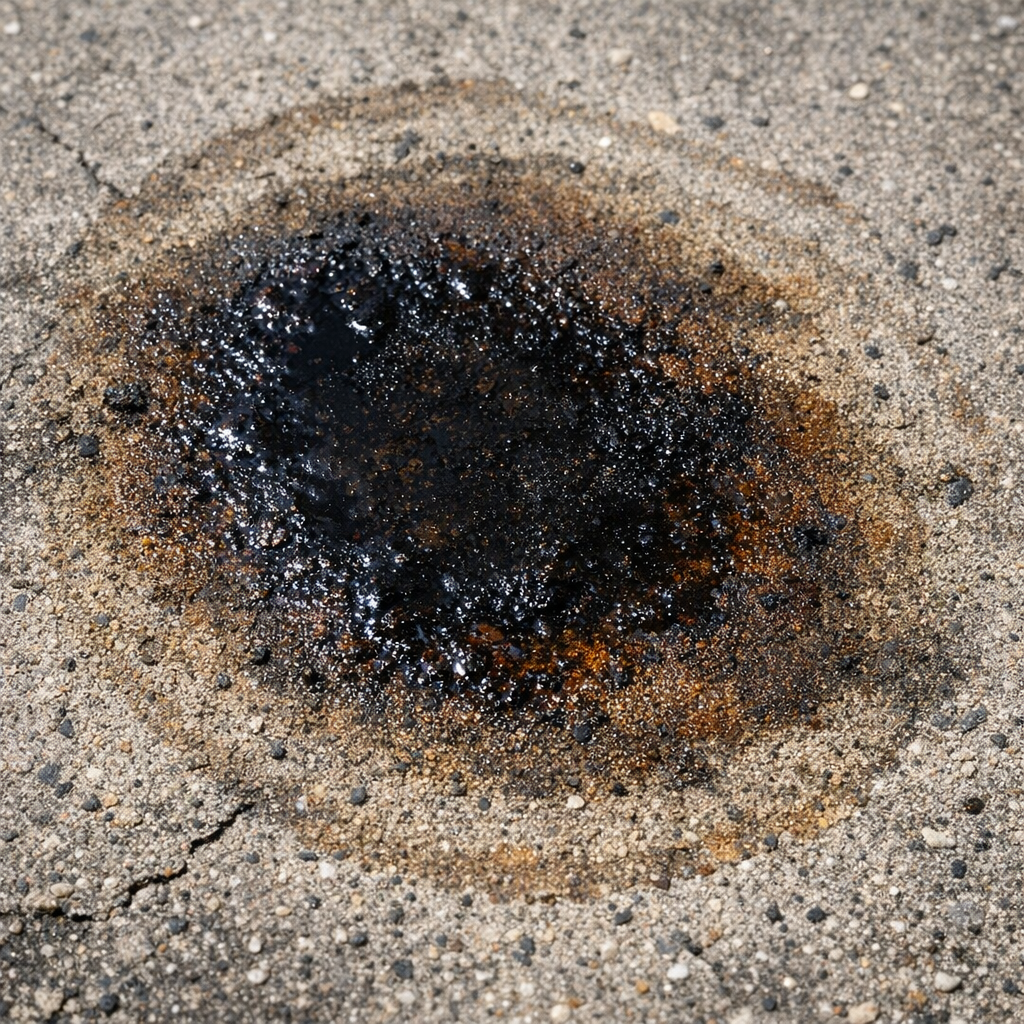
Fresh oil stains (within the current season) lift cleanly with the right detergent and pressure. Multi-year stains require more effort and may not come out completely. We'll tell you what to expect before we start. Not a pleasant surprise at the end.
Salt deposits
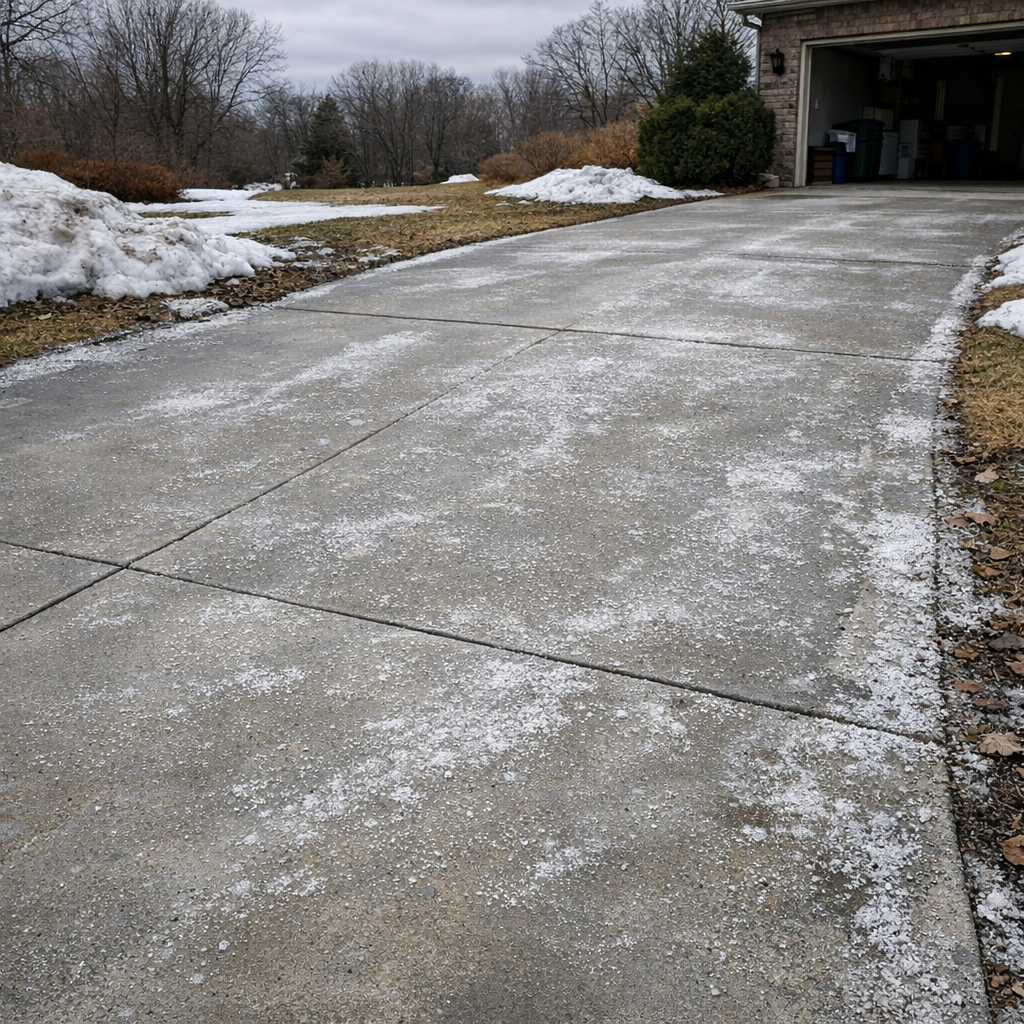
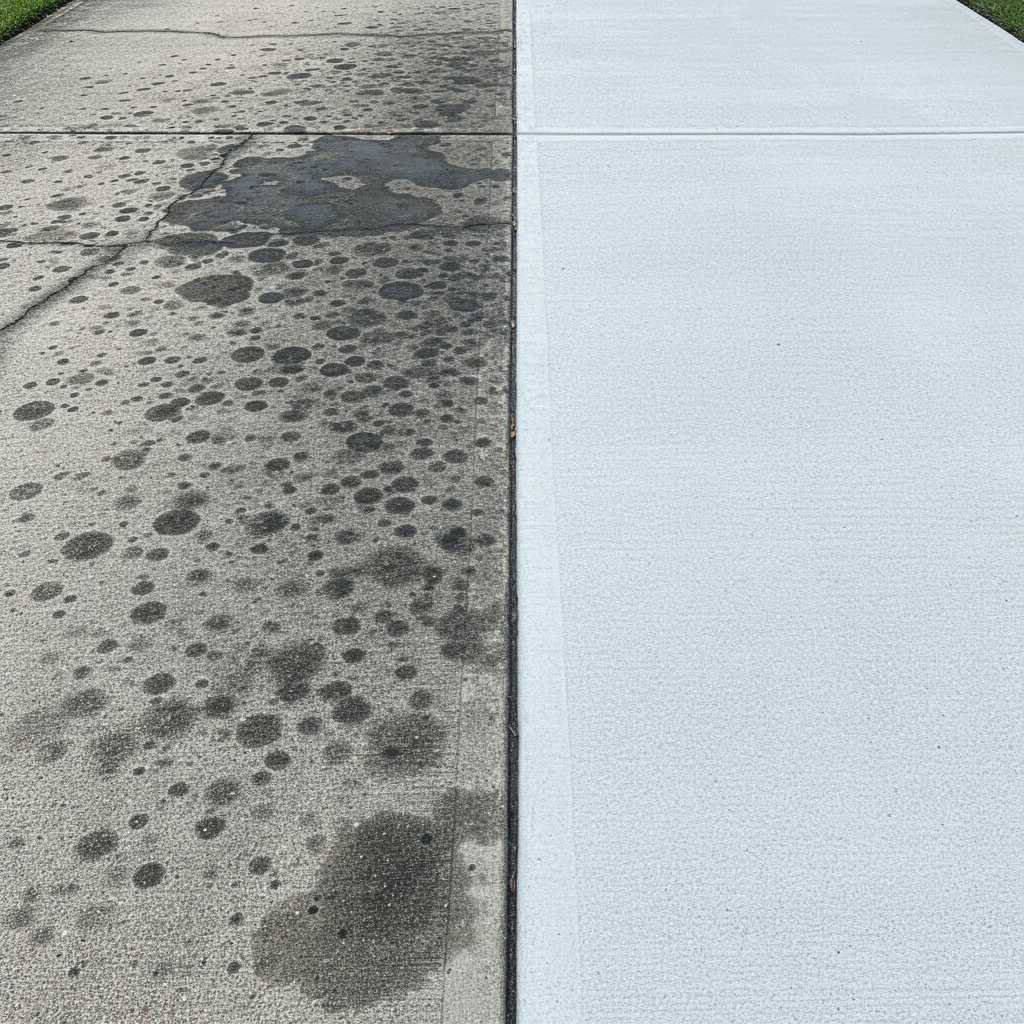
Road salt brine works into concrete pores over winter and leaves white mineral deposits that a garden hose doesn't touch. Removing those requires specific detergent application and isn't always included in a base quote unless you mention it. If your driveway has white staining along edges or the surface looks chalky in dry weather, flag it when you call.
One thing that doesn't affect our pricing: how far away you are within our service area. We cover Naperville, Arlington Heights, Schaumburg, Wheaton, and 20+ other suburbs. The quote is based on the job, not the drive.
Why Chicagoland driveways are a different situation
If you've ever moved here from somewhere warmer and wondered why your driveway looks worse than it ever did back home, welcome to winter maintenance in the Midwest. Chicago road treatment is aggressive. Brine application starts before the first snowflake, rock salt goes down during, and the residue is still working on your concrete in April.
That changes two things about driveway pressure washing here:
First, the spring wash isn't optional the way it might be in, say, Atlanta. Six months of freeze-thaw cycles, brine spray, and salt residue sitting in concrete pores needs to come out before summer heat bakes it further in. Skipping the spring wash doesn't mean the driveway stays the same. It means the damage compounds.
Second, the buildup is chemically different from regular dirt. Mineral salt deposits require specific detergent to lift. High pressure alone won't dissolve them. We've cleaned enough Chicagoland driveways to know what's salt staining versus oil versus general grime, and we use different approaches for each. A national franchise showing up with the same method for everything is the reason some driveways look clean and some still look gray after washing.
This also means the University of Illinois Extension's guidance on exterior maintenance holds here: annual cleaning is the most cost-effective way to protect concrete. Deferring it means harder jobs and more damage to lift.
DIY vs. hiring a pro: the honest math
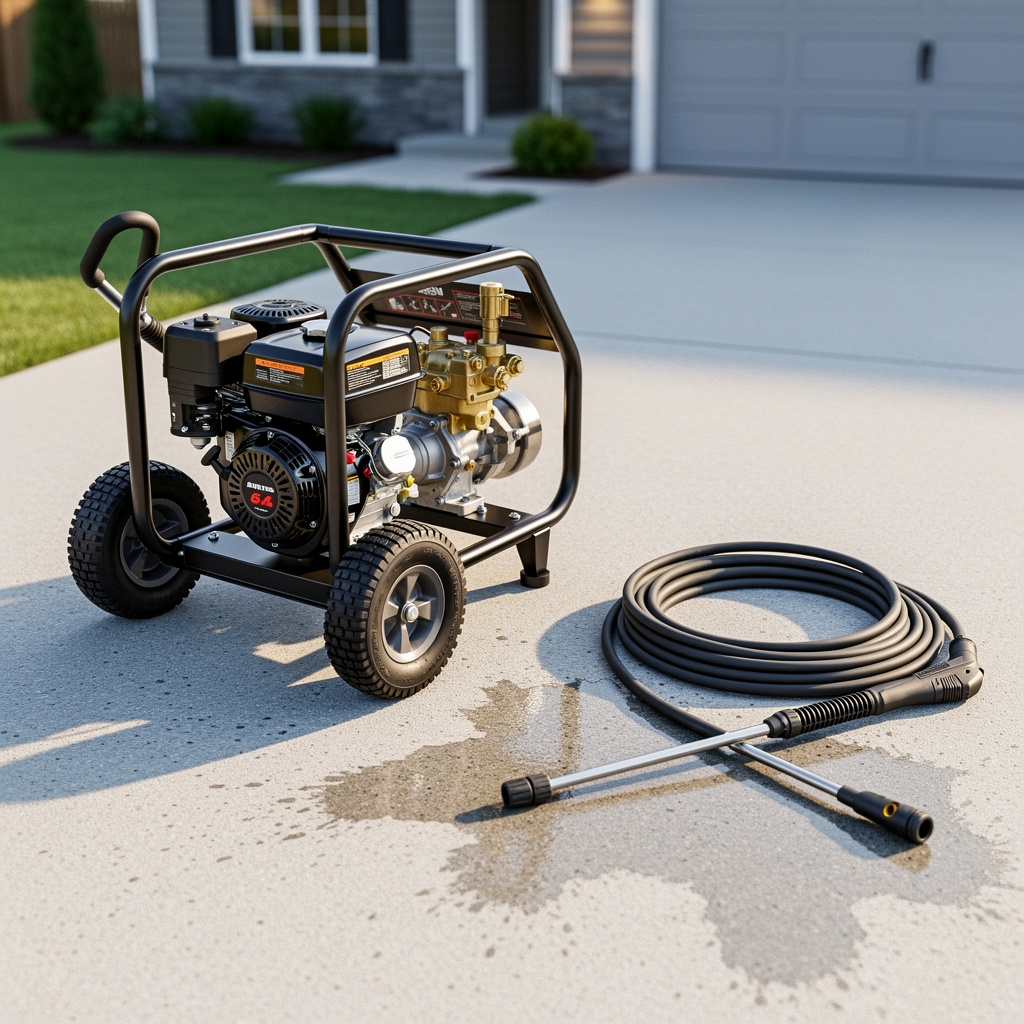
You can rent a pressure washer and do this yourself. For a small driveway in decent shape, that's reasonable. Here's where people run into trouble:
The first paying job was a neighbour on the block. Sam and his partner showed up early, worked through it, and sent before-and-after photos when they were done. The neighbour left a 5-star review. The second job came from a neighbour of that neighbour. No advertising, no marketing. Word-of-mouth from one clean driveway.
Most people who call us have already tried the DIY route at some point. The issue isn't usually the equipment. It's the detergent and the pressure settings.
Where DIY works
- Small concrete driveway in good shape
- Washed within the last 1 to 2 years
- No oil stains or salt deposits
- You have time to pick up, use, and return equipment
Where a pro is worth it
- 3+ years of buildup and salt staining
- Oil stains that need specific detergent
- Brick pavers requiring careful pressure control
- You want it done in a morning, not a weekend
The case for skipping a year to save money isn't as strong as it looks. Skipping annual washing means the next job takes longer, costs more, and may still leave residual staining that a single pass won't fully lift. Deferring maintenance on a Chicagoland driveway is one of those things that feels like saving money and isn't.
How often should you pressure wash your driveway
The standard recommendation is 1 to 2 times per year for a Chicagoland driveway. Here's what that actually looks like in practice:
- Spring wash (April to May): non-optional for most Chicagoland homes. This clears winter salt, brine, and freeze-thaw debris before summer sets in.
- Fall wash (September to October): optional, but useful if your driveway gets heavy vehicle traffic or you want it clean before winter treatment starts. Also a good time to address any oil drips before they set through another winter.
- Every 2 to 3 years if you skip spring: possible, but the job will be harder, take longer, and cost more. Some staining that worsens with each skipped season may not lift completely.
The right time of year matters too. Don't wash below 40°F. Water left in concrete pores can freeze overnight and cause spalling. April is the window because the last hard freeze has passed, the salt residue is still sitting on the surface from winter, and you have a full summer of dry weather ahead to let the concrete breathe.
For more on timing, our full guide on pressure washing frequency by surface covers every exterior surface on a Chicagoland home and what schedule actually works here.
When not to hire a pressure washing company
Yes, this is the part where we talk you out of the job. A few situations where pressure washing won't help or might make things worse:
Cracked or spalling concrete
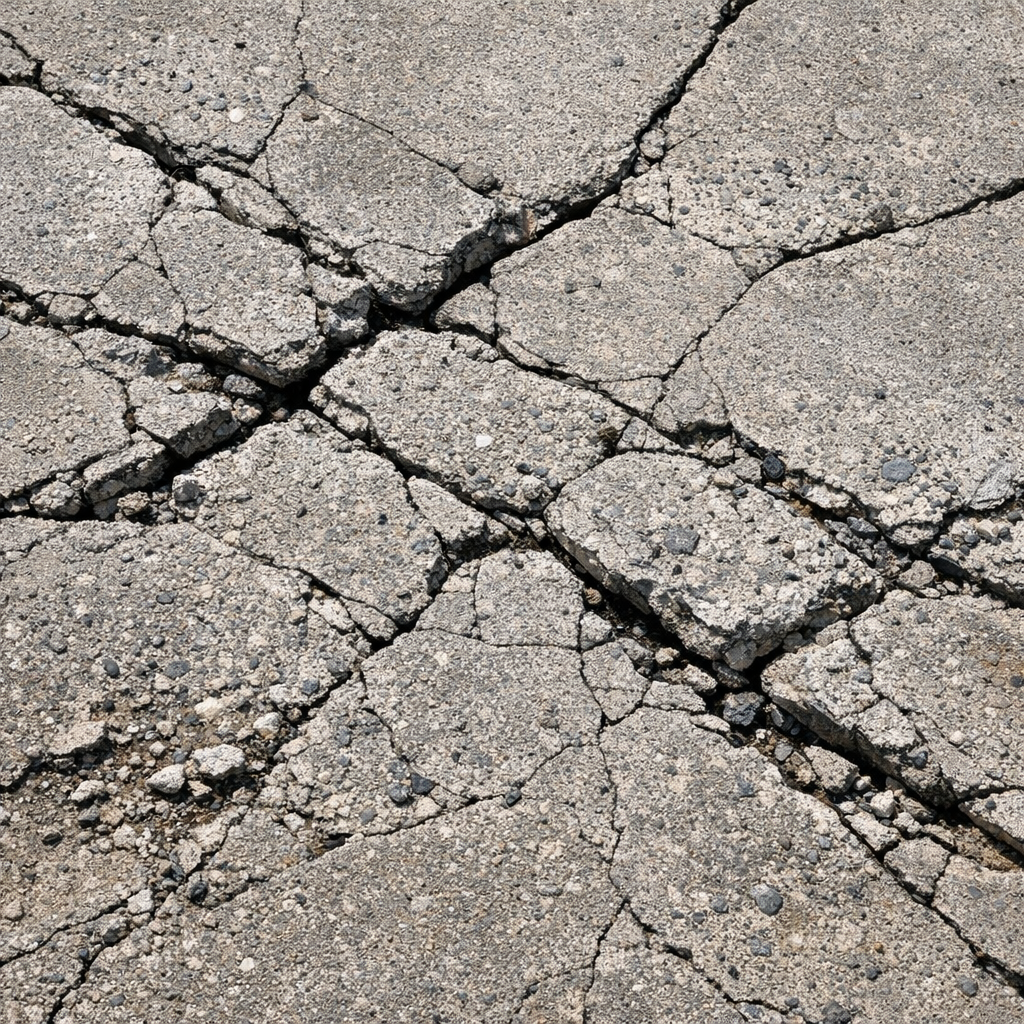
Pressure washing doesn't fix cracks. It forces water into them, which leads to more freeze-thaw damage over winter. If your concrete has significant cracking or is visibly spalling, get the damage repaired first. Then call us.
Freshly sealed driveways
If you had your driveway sealed within the last 6 to 12 months, high-pressure washing can strip or compromise the sealant coating. Let it cure for at least a full season before washing.
Multi-year oil stains on old concrete
Old oil stains on porous concrete that's seen several winters are significantly improved by pressure washing, but full removal isn't guaranteed. If someone promises complete removal on sight without looking at it, that's a red flag. We'll be straight with you about what's realistic.
Asphalt driveways
High-pressure washing on asphalt can strip the surface binder and accelerate deterioration. Asphalt driveways should be cleaned with low-pressure rinsing and appropriate detergent, not the same equipment settings used on concrete.
If you're unsure whether your driveway is ready to be washed, text us a photo. We'll tell you honestly whether now is the right time or whether something needs to be addressed first. The EPA also notes that cleaning runoff from deteriorating surfaces can introduce contaminants into storm drains — another reason to address structural issues before washing.
Frequently asked questions

How much does it cost to pressure wash a driveway in Chicagoland?+
A standard two-car concrete driveway runs $100 to $175 with Power Play. Larger driveways, brick pavers, or driveways with oil stains and heavy salt buildup cost more. Call or text (312) 488-9033 for a free quote with same-day response.
How long does it take to pressure wash a driveway?+
A well-maintained driveway washed annually takes 1 to 2 hours. One that hasn't been touched in 3 or more years takes 2 to 3 hours because of heavier buildup and more detergent time. We send before-and-after photos when the job is done.
Can pressure washing damage a concrete driveway?+
Using too high a pressure setting on older or damaged concrete can cause surface etching or spalling. The correct range for residential concrete is 2,000 to 4,000 PSI. If your concrete has existing cracks or compromised areas, those should be addressed before washing.
How often should I pressure wash my driveway?+
Once a year is the baseline for most Chicagoland driveways, ideally in April or May after winter. Driveways with heavy vehicle traffic or that park oil-leaking vehicles benefit from a second wash in early fall. Salt damage makes the spring wash non-optional here.
Do I need to seal my driveway after pressure washing?+
Sealing is a separate service and something we don't do. After washing, the concrete needs 24 to 48 hours to dry fully before sealing. If you want to seal, plan for it as a separate visit the following day, either with us referring a sealer or a separate contractor.
What is the difference between pressure washing and power washing?+
Power washing uses heated water; pressure washing uses cold water at high pressure. Both clean effectively. For residential driveways in Chicagoland, cold pressure washing at 2,000 to 4,000 PSI handles road salt, oil stains, and general grime. Heated water is more common in commercial applications.
Can I pressure wash my driveway myself?+
You can rent a pressure washer and do it yourself. The risk is using the wrong pressure setting on pavers or older concrete, lifting joint sand, or using the wrong detergent for salt staining. If your driveway is in good shape and recently washed, DIY is reasonable. Years of buildup or oil stains are better handled with professional equipment and detergents.
Can oil stains be removed from a driveway?+
Fresh oil stains within the current season come up cleanly with the right detergent and pressure. Stains that have been sitting for multiple years are significantly improved but may not come out completely. We'll tell you what to expect before we start, not after.
Sources referenced in this article
Related from Power Play
Your driveway has been waiting long enough.
We're not saving lives. We're cleaning driveways. But a clean driveway on a Saturday morning does something for a person. Free quote, same-day response. Two guys, no crews.
Sam
Co-owner, Power Play Pressure Washing
Sam started Power Play with his teammate Michael Verni in 2024. Both grew up playing hockey together for the Chicago Blues in Bensenville. He's been on every property wash since day one across 200+ properties in the north and northwest suburbs. If you book with Power Play, Sam and Michael show up.